
Many buyers feel unsure about caravan sizes and want a clear way to choose the right fit. Size affects comfort, towing confidence, storage, and the range of destinations you can travel to, so it is essential to understand how the measurements work.
This guide gives you simple information about caravan sizes so you can compare options without confusion. You will see how length, width, height, and layout shape your experience on the road, and how to pick a size that suits your family and your tow vehicle.
At SWAG, we have spent years building off-road hybrids for Australian conditions, and this guide brings that practical knowledge together to help you choose with confidence.
What Does Caravan Size Really Mean?
Caravan size refers to a set of measurements that affect comfort, storage, towing, and where you can travel. These measurements include the body length, overall length, width, height, and internal space. Understanding these terms helps you compare caravan sizes with confidence.
- Body length refers to the main section of the caravan from the front wall to the rear wall.
- Overall length includes everything from the tow hitch to the spare wheel or bumper.
- Width is the distance across the caravan from side to side.
- Height includes the body of the caravan and the roof structure.
- Internal space describes the usable room inside, including the layout and movement area.
Most Australian caravans follow similar limits. Width usually stays close to 2.5 metres, and height often ranges between 2.7 and 3.2 metres. These limits affect driveway access, storage at home, and entry into some parks and tracks.
Clear measurements help you understand how much space you will have inside, how the caravan will sit behind your vehicle, and how easy it will be to tow and store. Once you understand these terms, it becomes easier to compare sizes and match them to your needs.
Caravan Size Categories in Australia
Caravan sizes fall into clear length ranges. These ranges affect how much space you get inside, how easy the caravan is to tow, and how well it suits different types of trips. The sizes below give you a simple way to understand where most caravans sit in the market.
10–14 ft (Compact caravans):
Compact caravans suit solo travellers and couples who want simple layouts and light towing. These sizes offer basic sleeping and storage options but limited movement space. They are easier to tow and store, but can feel tight on longer trips.
15–17 ft (Mid-size caravans):
Mid-size caravans work well for couples and small families who want more internal space. They offer better layouts, improved storage, and more comfortable sleeping areas. These sizes still tow easily behind many mid-range vehicles.
18–20 ft (Larger hybrid and family caravans):
This size range suits families or couples who want more space for longer trips. Larger caravans in this range support bunk layouts, island beds, and more generous internal movement. They still remain manageable to tow and store while offering a noticeable step up in comfort.
20 ft and above (Full-size caravans):
These sizes suit travellers who want maximum living space. They offer wide layouts, more storage, and larger internal zones. These caravans can be heavier and require strong tow vehicles. They also need more room for storage at home and can be harder to manoeuvre.
Understanding these size bands helps you see how caravan length affects comfort, layout, and towing. The next step is matching these sizes to your needs and travel plans.
Once you understand general size ranges, the next step is matching them to your own needs.
Which Caravan Size Fits Your Needs
Choosing the right caravan size becomes easier when you match your travel needs to a clear size range. Different sizes work better for different situations, and a simple comparison helps you understand what will suit your family, your trips, and your tow vehicle. The table below gives you a direct way to see which caravan sizes fit common travel scenarios. It keeps the decision simple and helps you narrow your options with confidence.
Your Situation | Recommended Size Range | Reason This Size Fits |
Couples doing shorter trips | 12–16 ft | Light towing, simple layouts, enough space for short stays. |
Couples planning longer trips | 16–18 ft | More internal room, better storage, improved comfort on extended travel. |
Small families | 16–18 ft | Supports bunk layouts, separate sleeping areas, workable movement space. |
Larger families | 18–20 ft | More room for multiple bunks, extra storage, better comfort on long trips. |
Travellers focusing on off-road use | 16–19 ft | Strong balance of space, weight, and off-road performance. |
Buyers with limited home storage | 15–17 ft | Easier to store in driveways or carports and simpler to manoeuvre. |
How Size Affects Comfort and Layout
Caravan size shapes how comfortable the space feels and how well the layout works day to day. Smaller caravans keep everything close and simple, which suits travellers who spend most of their time outside and only need space for sleeping and basic use.
Mid-size caravans offer more movement room, clearer separation between beds and living areas, and better storage, which helps couples or small families stay organised.
Larger caravans provide the most internal space, supporting bunk layouts, wider seating, and more defined zones. This extra room helps families settle in on longer trips, stay comfortable during bad weather, and keep the space tidy with less effort.
SWAG Caravan Sizes Breakdown
Understanding caravan sizes becomes much easier when you can see real examples in front of you. SWAG builds hybrid caravans and hybrid pop-tops across three main size ranges. Each range suits different towing needs, family sizes, and travel styles. The breakdown below gives you a clear sense of how much space you can expect at each size and helps you work out which models fit the way you travel.
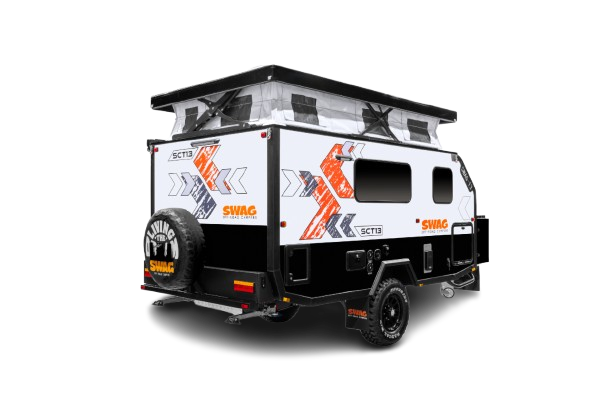
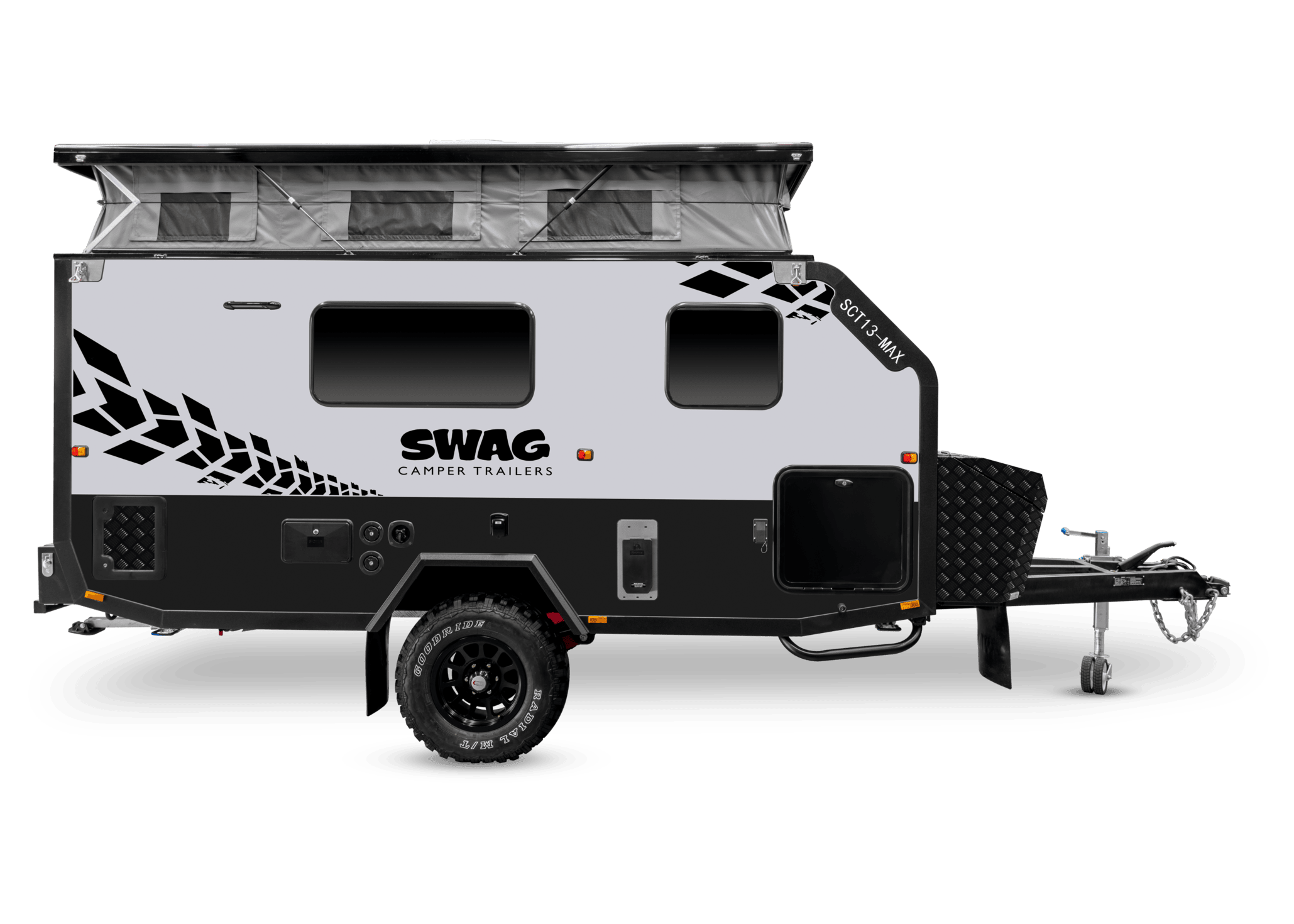
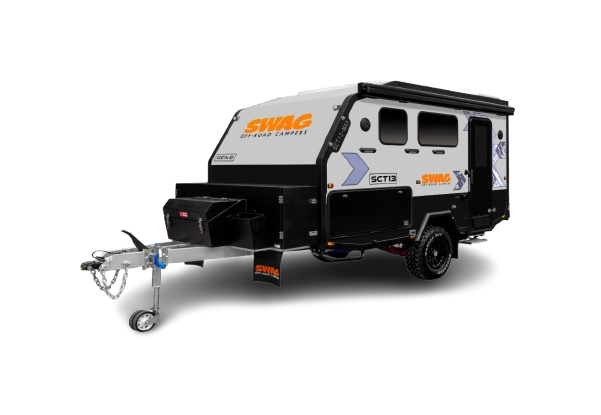
13 Foot Range – Compact and Easy to Tow
Models in this size:
- SCT13 Off-Road Hybrid Pop-Top Couples
- SCT13 Off-Road Pop-Top Adventure Model 2B
- SCT13 Off-Road Hybrid Caravan for Couples
Who This Size Works For:
Travellers who want a smaller hybrid that tows easily, fits in tighter storage spaces, and feels simple to manage on the road. This size suits couples, owners of lighter tow vehicles, and anyone stepping up from a camper trailer who still wants strong off-road capability in a compact footprint.
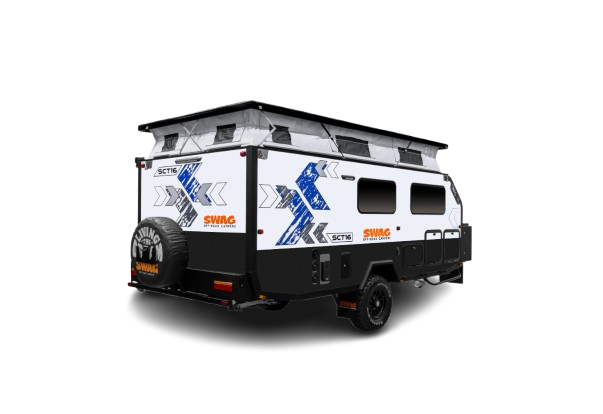
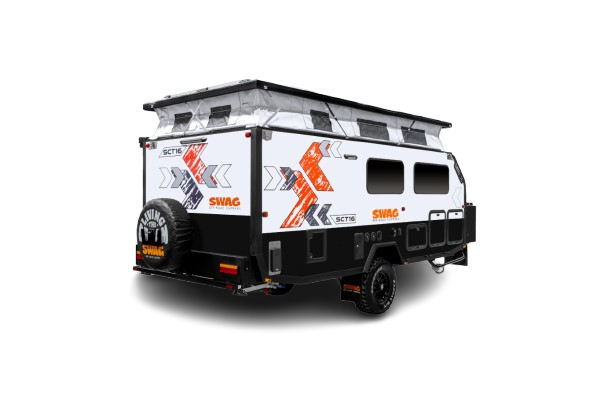
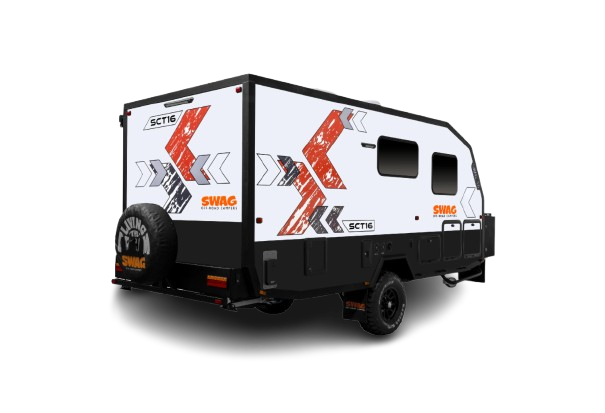
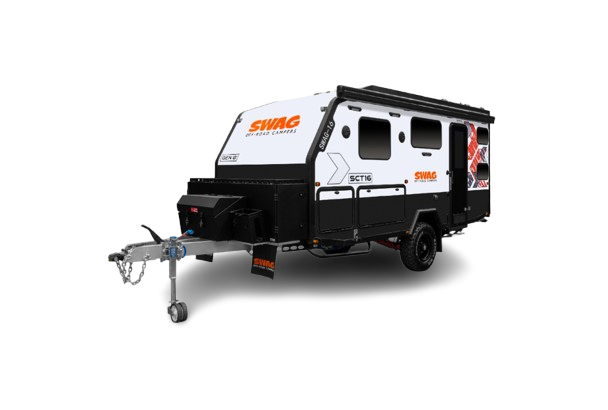
16 Foot Range – Mid-Size Comfort With More Space
Models in this size:
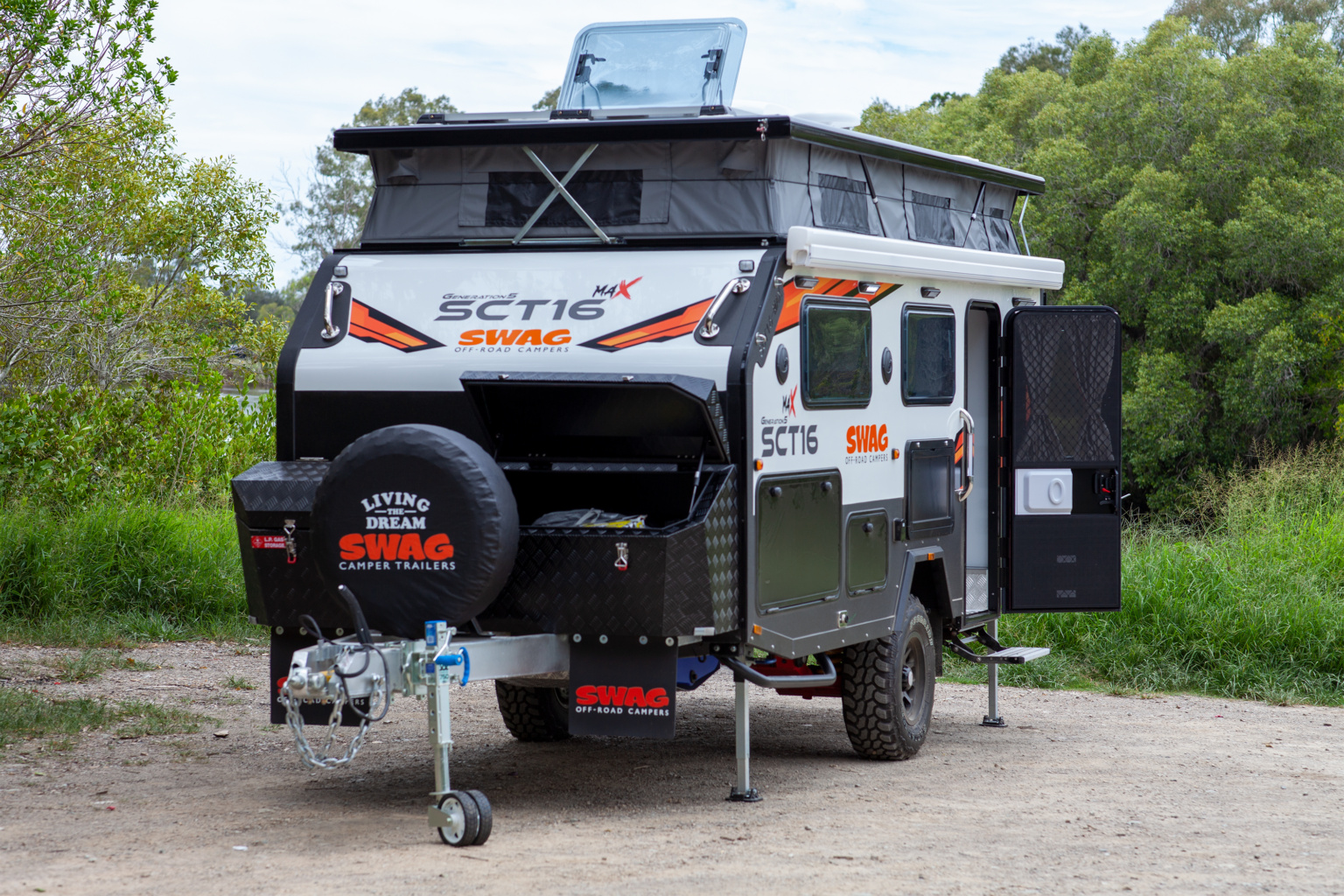
- SCT16 Off-Road Hybrid Pop-Top Caravan for Couples
- SCT16 Off-Road Hybrid Pop-Top Caravan Family 4B
- SCT16 Off-Road Hybrid Caravan for Couples
- SCT16 Off-Road Hybrid Caravan Family 4B
Who This Size Works For:
Couples who want more internal room and storage without moving into a large van, and small families who need a practical bunk layout for one or two children. This size also works for travellers who mix highway driving with off-road use and want a balance of comfort, space, and manageable towing for mid-range 4WDs.
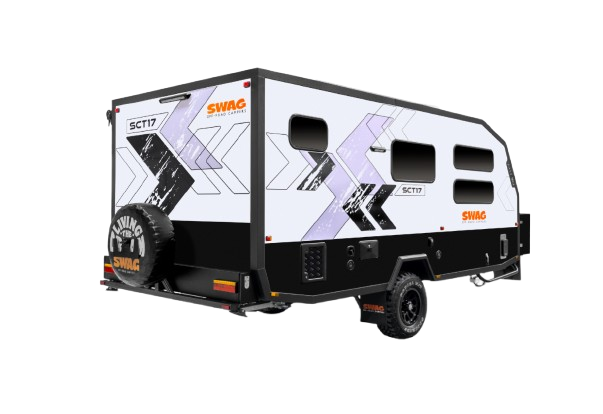
17-18 Foot Range – Large Hybrids for Space and Comfort
Models in this size:
- SCT17 Semi Off-Road Hybrid Caravan for Couples (7.45m)
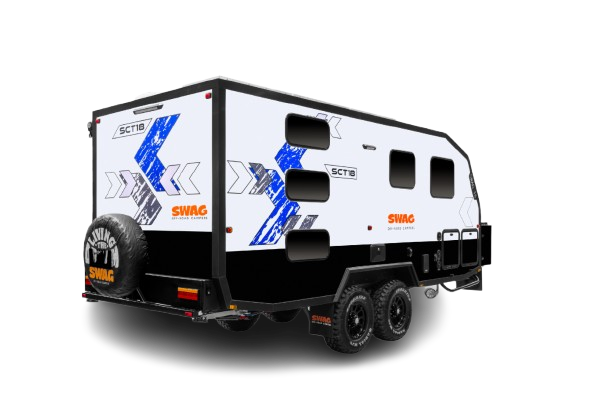
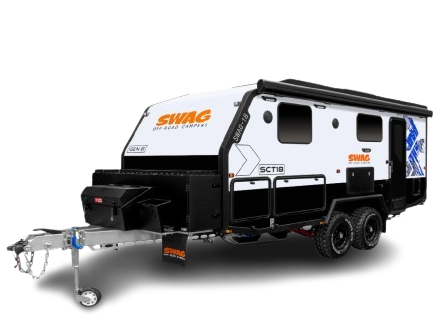
- SCT18 Off-Road Hybrid Caravan for Couples (7.75m)
- SCT18 Off-Road Hybrid Caravan for Families 4B (7.75m)
- SCT18 Off-Road Hybrid Caravan for Families 5B (7.75m) ← Triple bunk
Who This Size Works For:
Travellers who want more internal space, clearer separation between living and sleeping areas, and the comfort needed for long stays or extended touring. This range suits growing families, buyers who want double or triple bunks, and travellers who want maximum comfort while still keeping the weight and size manageable for hybrid-style towing.
Our Simple Size Decision Guide
Choosing a caravan size becomes much easier when you work through a few practical steps. The points below help you compare your needs with the sizes that will suit your vehicle, storage, and travel plans.
1. Start with your tow vehicle
Your tow vehicle sets the upper limit for the caravan size you can choose.
Check four key numbers in your owner’s manual, compliance plate, or manufacturer’s website:
- Braked towing capacity
- Tow ball download limit
- Gross Vehicle Mass (GVM)
- Gross Combination Mass (GCM)
If your vehicle has a lower towing capacity, a 6m or 7.15m caravan will keep you within safe limits.
If you drive a larger 4WD with higher capacity, you may have more flexibility to consider a 7.45m–7.75m caravan.
If you are unsure, choosing a caravan size that sits comfortably below your limits will always tow more smoothly and reduce stress on the vehicle.
2. Think about who is travelling
Your group size directly shapes the amount of internal space you need. Generally, our SWAG community sizes up for ease, but if alternative sleeping arrangements like swags are an option for you, this may give you some more flexibility.
- Couples often feel comfortable in 6m or 7.15m caravans because these sizes offer enough space for daily use without unnecessary length.
- Families with one or two children generally prefer a 7.15m caravan so they have room for bunks and better movement space.
- Larger families usually need a 7.75m layout for double or triple bunk setups and more internal separation.
If you want a clear separation between sleeping areas, a larger size will make travel feel more comfortable and organised.
3. Consider how often and how far you travel
Your trip length influences how much internal space you will appreciate.
- Short trips are easier with smaller caravans because towing and setup feel lighter and quicker.
- Medium trips benefit from mid-size caravans that offer more storage and room to move.
- Extended touring feels more comfortable with a larger caravan that gives you space for everyday routines, food storage, and bad weather days.
If you plan to travel for weeks or months at a time, extra internal space will improve daily comfort.
4. Look at your home storage
Caravans must fit comfortably into your home storage space. There are other options like caravan storage yards, but you’ll have to weigh up how bad you need that extra space vs extra hassle.
- 6m caravans suit standard driveways, carports, and suburban homes with limited space.
- 7.15m caravans might need more open driveways or wider access options.
- 7.75m caravans require longer driveways, wider gates, or open side access.
A caravan that fits easily at home will make daily use simpler and reduce the risk of tight manoeuvring or difficult parking.
5. Think about where you like to stay
Different sites suit different caravan sizes. If you have a favourite destination, make sure your van can park on it.
- Older caravan parks often have shorter sites, making 6m and 7.15m caravans easier to manage.
- Free camps and national parks sometimes have narrow or uneven access points, which are easier to navigate with shorter caravans.
- Fully serviced parks offer more space, so larger caravans fit comfortably.
If you prefer tighter, more remote sites, a smaller size may be more practical.
6. Decide how much internal space you want
Consider how you use the inside of your caravan. Think about your everyday routines like cooking, getting dressed, moving around, storing gear, and choose a size that supports those routines without feeling cramped.
- If you want space for children to play or have separate sleeping areas, a larger size will feel more comfortable.
- If you prefer a simple setup or spend most of your time outside, a smaller size will work.
- If you want more storage for long trips, mid-size or larger caravans give you more organised packing options.
Tow Vehicle and Safety Considerations
The size and weight of your caravan must align with what your tow vehicle can safely handle. Every vehicle has a few key limits, and understanding these limits helps you choose a caravan size that tows smoothly and stays safe on the road.
Towing Capacity:
This is the maximum weight your vehicle can legally tow. Your caravan’s ATM (Aggregate Trailer Mass) must stay within this limit. Smaller and mid-size caravans sit comfortably within the towing range of many mid-size 4WDs. Larger caravans often require a heavier vehicle with a higher towing rating.
Payload and Packing:
Caravan size affects how much gear you can carry. A larger van gives you more storage, but any added weight must stay within the caravan’s payload limit. Exceeding payload can affect stability and braking.
Tow Ball Weight:
This is the weight the caravan places on your tow vehicle’s tow ball. A safe tow ball weight usually sits between 8% and 12% of the caravan’s loaded weight. A size that keeps this within your vehicle’s limits will tow more predictably and stay more stable on uneven roads.
GVM and GCM:
Your vehicle also has a GVM (Gross Vehicle Mass) limit, which includes passengers, fuel, accessories, and tow ball weight. The GCM (Gross Combination Mass) is the maximum combined weight of your vehicle and caravan. Choosing the right caravan size helps you stay within these limits without overloading your setup.
Learn more: Caravan Weights Explained
Braking and Control:
Larger caravans place more load on the vehicle’s braking system. Electric brakes on the caravan help manage this, but the tow vehicle must still stay within safe weight margins. A size that suits your vehicle reduces strain, improves braking, and makes long drives easier.
Off-Road Conditions:
Travellers who plan to take gravel tracks, corrugations, or remote roads should choose a size that their tow vehicle can control confidently on loose surfaces. A caravan that is too heavy or too long for the vehicle can feel harder to manage off-road.
How to Check Your Vehicle’s Towing Limits
You can find your towing information in three places:
- Owner’s manual: lists braked towing capacity, tow ball download limit, GVM, and GCM.
- Compliance plate: located under the bonnet, showing GVM and axle limits.
- Manufacturer website: useful if you need specs for your exact model and year.
These numbers tell you how much weight your vehicle can tow, how much load it can carry, and how heavy your caravan can be once packed for travel.
Choosing a caravan size that fits your tow vehicle’s limits improves stability, reduces stress on the engine and brakes, and keeps your setup safe across highways, back roads, and off-road tracks. A clear match between caravan size and vehicle capability is one of the most important steps in buying the right van.
Why Choose SWAG for Your Next Caravan
Finding the right caravan size is easier when you can compare real models that suit Australian roads, family needs, and common tow vehicles.
SWAG builds hybrids between 13 and 18 feet, giving you clear options whether you want compact towing, mid-size comfort, or more space for a growing family. Each model is built for off-road travel, long-term reliability, and practical day-to-day use.
If you want help choosing the right size for your setup, our team can walk you through towing limits, layout options, and the models that match your travel plans.
Explore our range online or find your nearest SWAG showroom to see the sizes in person and get advice that fits your needs. We’re here to help you choose a caravan size with confidence, so your next trip feels easy from the moment you pull out of the driveway.