
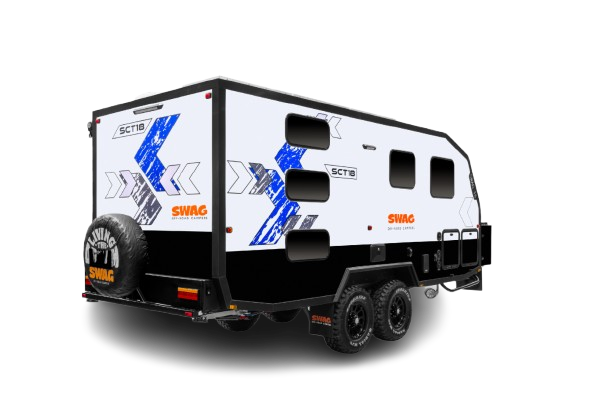
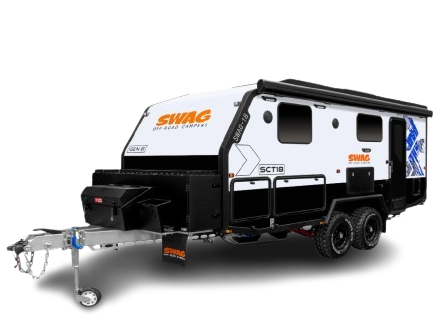
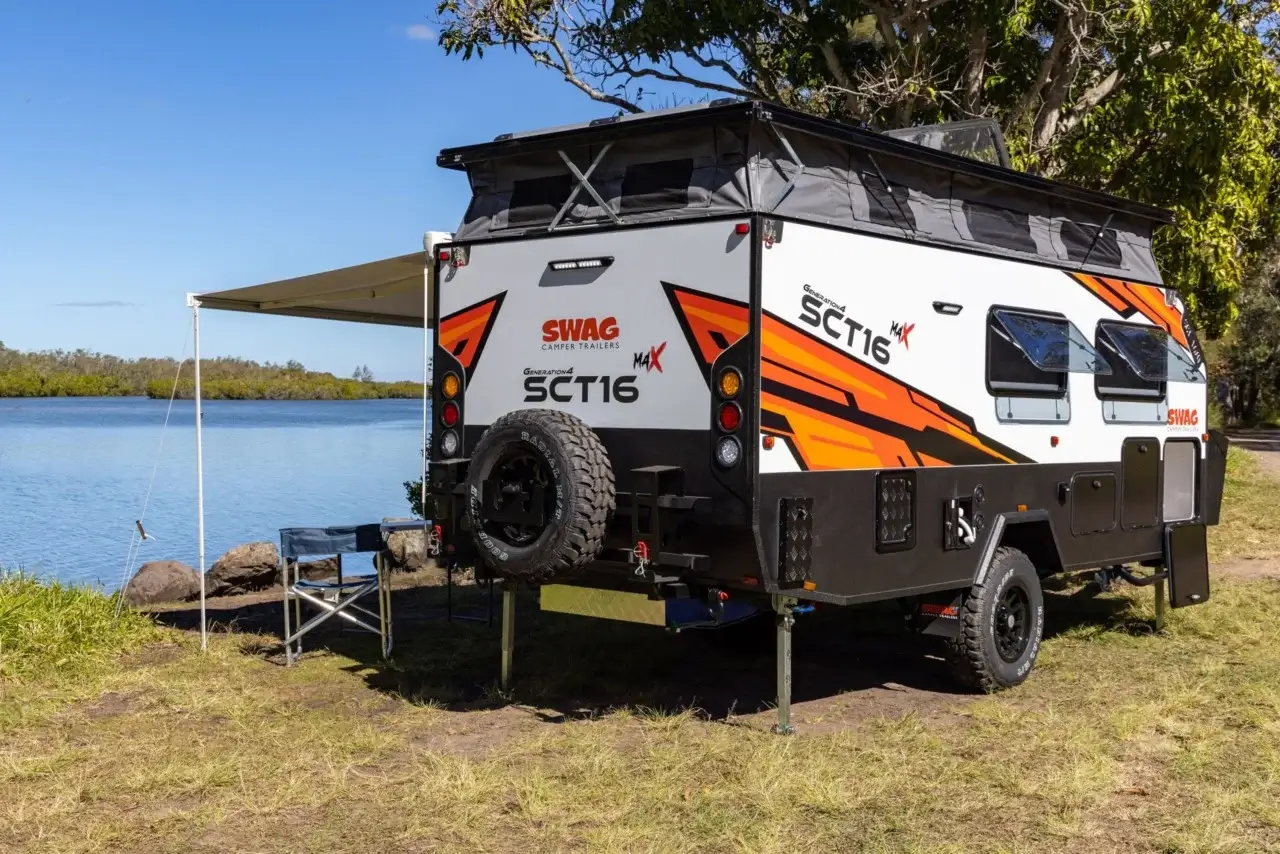
Choosing between a pop-top vs hard-top caravan comes down to what matters most when you are towing, storing and living in your caravan.
A pop-top gives you a lower travelling profile, which can help with overhead clearance, home storage and aerodynamic drag. A hard-top gives you permanent full height, with no roof to raise at camp and stronger separation from outside temperatures and noise.
Neither design is automatically lighter, cheaper or better off-road.
We offer both pop-top and hard-top caravans at SWAG, so the right choice comes down to how and where you plan to travel.
Pop-Top vs Hard-Top Caravans at a Glance
| Factor | Pop-Top Caravan | Hard-Top Caravan |
|---|---|---|
| Travelling height | Lower | Higher |
| Aerodynamic profile | Lower | Higher |
| Weight | Model dependent | Model dependent |
| Purchase price | Model dependent | Model dependent |
| Setup | Roof must be raised | No roof setup |
| Insulation | Less solid material around upper section | Full solid wall and roof |
| Ventilation | Strong high-level airflow | Depends on windows and vents |
| Noise insulation | More outside noise through upper section | Greater sound separation |
| Overhead storage | Can be more restricted | Usually more flexibility |
| Home storage | Lower height can help | Requires more clearance |
| Roof maintenance | More moving components | Simpler fixed structure |
| Off-road capability | Depends on complete caravan design | Depends on complete caravan design |
The biggest mistake is choosing based on what a pop-top or hard-top is supposed to offer.
Compare the actual caravan.
What Is a Pop-Top Caravan?
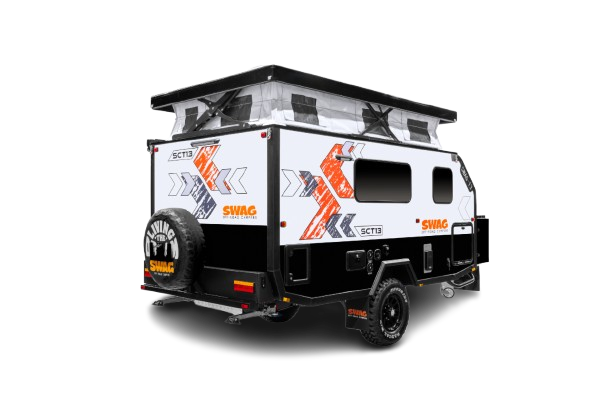
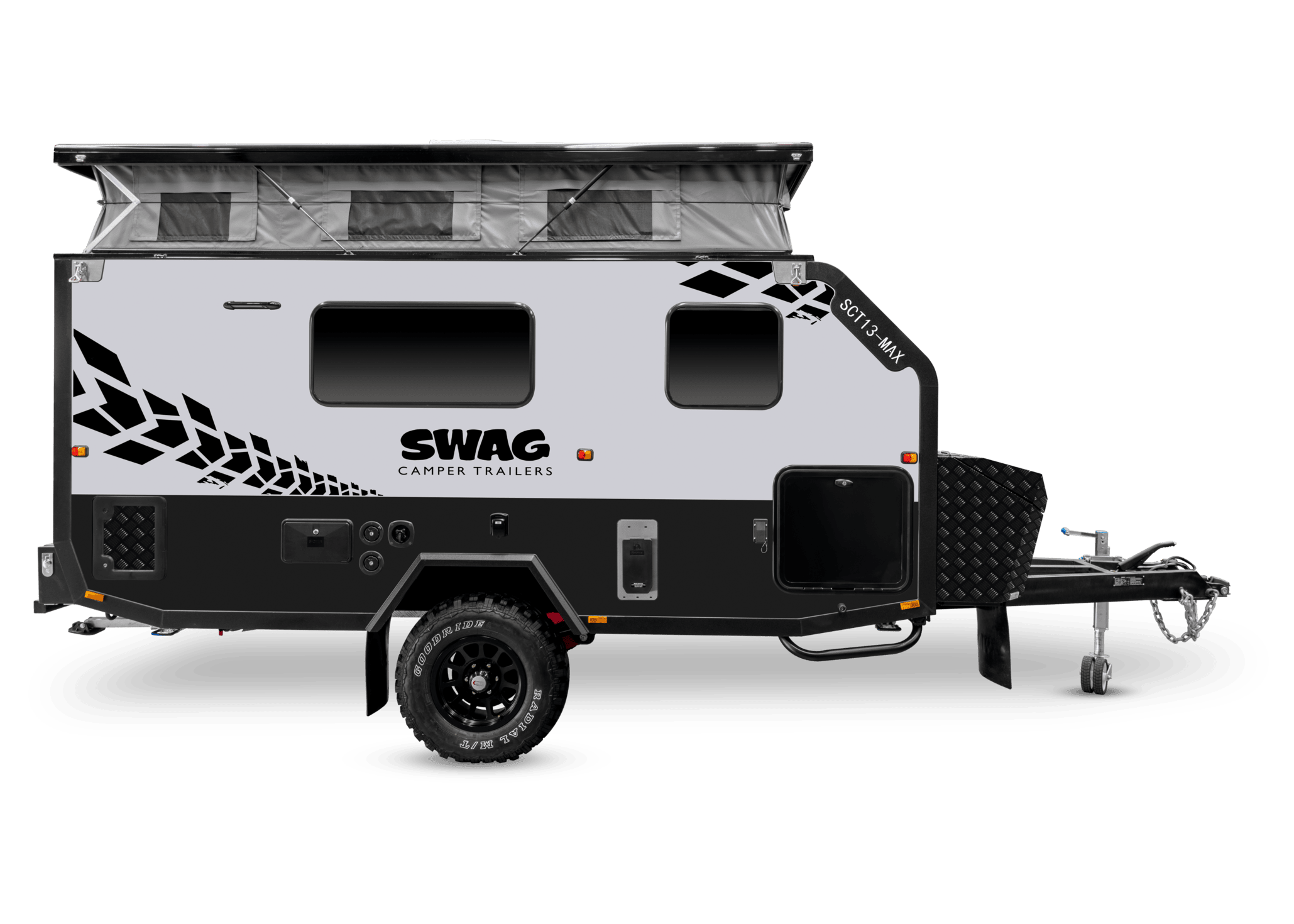
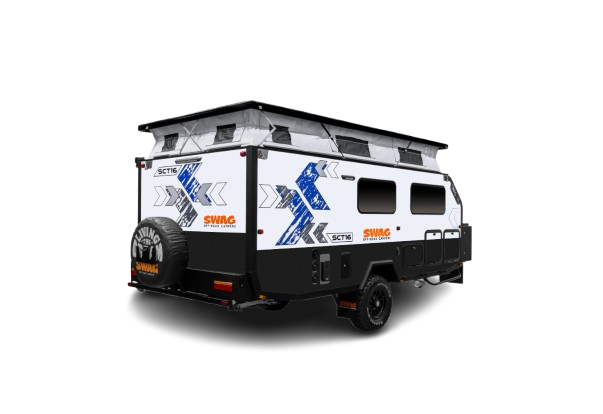
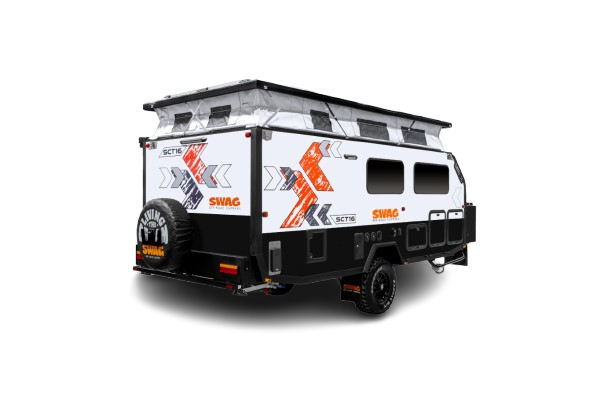
A pop-top caravan has a solid main body with a roof that lowers for travel and raises once you reach camp.
When raised, a flexible upper section fills the space between the caravan walls and roof. This allows us to reduce the overall travelling height without sacrificing standing room once you are set up.
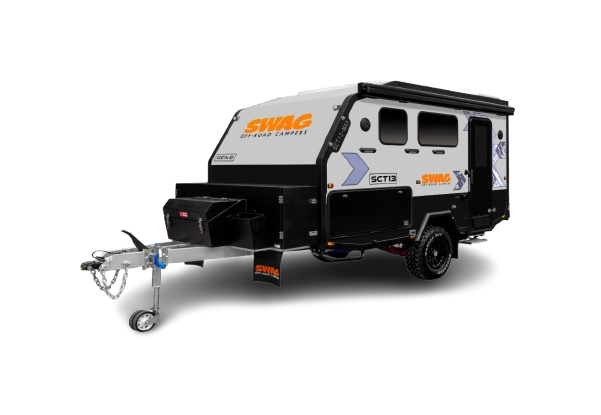
Roof systems also differ between caravans. Our SCT13 pop-top, for example, uses an electric roof system, so raising the roof does not mean manually lifting the full weight yourself.
The biggest benefit of the design is the lower travelling profile.
What Is a Hard-Top Caravan?
A hard-top caravan keeps its full internal height at all times.
The walls continue directly into a fixed roof, so there is nothing to raise when you arrive at camp.
That gives you a simpler setup and a completely solid upper structure.
The trade-off is carrying that full height everywhere you tow the caravan.
Which Is Easier to Tow?
One of the clearest differences between our pop-tops and hard-tops is travelling height.
A lower caravan presents less frontal area while towing. It also gives you more clearance around trees, carports and other overhead obstacles.
Our SCT13 Couples models show the difference clearly:
| SCT13 Couples | Pop-Top | Hard-Top |
|---|---|---|
| Approx. travelling height with A/C | 2.72 m | 3.10 m |
| Difference | 380 mm lower | — |
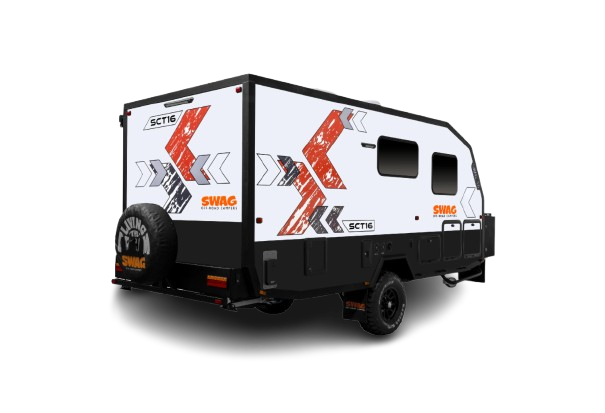
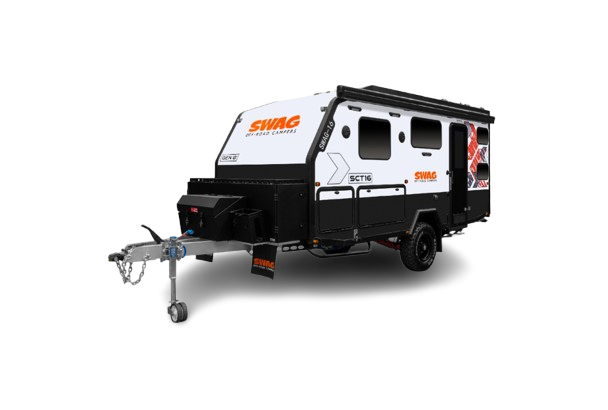
The difference is even greater on the SCT16:
| SCT16 Couples | Pop-Top | Hard-Top |
|---|---|---|
| Approx. travelling height with A/C | 2.68 m | 3.10 m |
| Difference | 420 mm lower | — |
Those measurements include the roof-mounted air conditioner.
That 380–420 mm difference can be significant if you regularly travel through heavily treed tracks or have limited clearance at home.
It does not mean the pop-top will automatically feel easier to tow in every situation. Caravan weight, width, tow vehicle, suspension, tyres and load distribution still matter.
Do Pop-Top Caravans Use Less Fuel?
A lower travelling profile can reduce aerodynamic drag, which can help reduce the amount of work your tow vehicle needs to do at speed.
That gives a pop-top a potential efficiency advantage.
We would not put a fixed fuel-saving figure on it, though.
Your tow vehicle, speed, caravan width, total load, tyres, road conditions, terrain and wind all influence fuel consumption.
So rather than thinking:
Pop-top = X% less fuel
Think:
Pop-top = less frontal area pushing through the air.
How much difference that makes will depend on the complete setup.
Are Pop-Top Caravans Lighter?
Not necessarily.
This is one of the biggest misconceptions we see around pop-tops.
Look at our SCT13 Couples models:
| SCT13 Couples | Pop-Top | Hard-Top |
|---|---|---|
| Approx. tare | 1,995 kg | 1,975 kg |
| ATM | 2,500 kg | 2,500 kg |
The pop-top is approximately 20 kg heavier.
Move up to our SCT16 Couples and both versions have an approximate tare of 2,100 kg and ATM of 2,800 kg.
So if caravan weight is important to you, compare the actual specifications rather than assuming the pop-top will be lighter.
Pay attention to:
- Tare mass;
- ATM;
- Available payload;
- Ball weight; and
- Your tow vehicle’s towing limits.
Your water, food, gas, camping gear and personal belongings all need to fit within the available payload once you hit the road.
Are Pop-Tops Cheaper Than Hard-Top Caravans?
Not in our range.
Our comparable SCT13 pop-top and hard-top are priced the same.
On the SCT16, the pop-top is slightly more expensive than the hard-top.
The roof type alone does not determine the price.
Electrical systems, suspension, appliances, cabinetry, materials and overall specification all contribute to what a caravan costs.
So if budget is one of your main deciding factors, compare the specific models rather than starting with the assumption that one roof style will automatically save you money.
Which Is Easier to Store at Home?
This is where the lower height of a pop-top can make a very practical difference.
Our pop-top SCT13 sits around 380 mm lower than the hard-top while travelling. On the SCT16, the difference is around 420 mm.
That could determine whether the van fits under your existing carport or garage.
Before buying, measure:
- The lowest part of your garage or carport opening;
- Roller-door clearance;
- Beams or other overhead structures;
- The caravan’s total travelling height with A/C fitted; and
- How the angle of a sloping driveway changes the caravan’s height as it enters.
If you store your caravan outside with plenty of clearance, this difference may not matter much.
If your storage height is tight, it may become one of the main reasons to choose a pop-top.
Which Takes Longer to Set Up?
A hard-top is simpler in this respect.
There is no roof to raise before using the caravan.
With a pop-top, the roof needs to go up when you arrive and back down before you leave.
How much that matters depends on how you travel.
If you stay in one location for a week or two, the extra step is unlikely to change much.
If you move campsites every day, every part of setup and pack-down starts to matter more.
The mechanism also makes a difference. Our SCT13 pop-top uses an electric roof system, so setup is very different from an older manual pop-top that needs to be physically lifted.
That is why we recommend looking at how the actual roof works, not simply whether it is a pop-top.
Which Is Better Insulated?
A hard-top has an advantage because the solid walls continue all the way to the roof.
That gives you a more consistent barrier between the inside of the caravan and outside conditions.
A pop-top has a flexible section around the raised roof, so that part of the caravan does not insulate in the same way as a solid composite wall.
Our pop-tops still use insulated composite walls and an insulated roof, with reverse-cycle air conditioning to help manage internal temperature.
The difference becomes most relevant around the raised section.
If you regularly travel through colder areas, you may place more value on the full solid structure of a hard-top.
If most of your camping happens in warmer conditions, you may care more about the airflow available through a pop-top.
Which Has Better Ventilation?
A pop-top gives us another place to move air through the caravan.
The raised upper section can incorporate screened openings that allow warm air to move out through the higher part of the living space.
That can make the design particularly useful in warmer conditions.
Our hard-tops still rely on windows, vents and other airflow points, so a fixed roof does not mean poor ventilation.
The difference is that the pop-top gives you another high-level ventilation zone once the roof is raised.
For buyers who spend a lot of time camping in warm Australian conditions, that can be a meaningful benefit.
What About Noise and Privacy?
A hard-top generally gives you more separation from outside noise.
The reason is straightforward.
A solid insulated wall blocks sound differently to the flexible upper section of a pop-top.
You are more likely to notice this in:
- Busy caravan parks;
- Roadside camps;
- Windy conditions; or
- Locations where other campers are close by.
If most of your nights are spent in quiet bush camps, it may barely influence your decision.
If you plan on living in the caravan for extended periods, it may matter a lot more.
Which Gives You More Storage?
A hard-top gives designers more freedom to use the upper walls for cabinetry because nothing needs to lower.
That can create more opportunities for high-level storage.
With a pop-top, cabinetry needs to work around the lifting roof.
That does not automatically mean the caravan lacks storage.
Our SCT13 and SCT16 pop-tops still include significant storage throughout the interior.
The more useful question is:
Does the particular layout give you enough usable storage for how you travel?
Check where you will actually put:
- Clothes;
- Cookware;
- Food;
- Bedding;
- Outdoor gear; and
- Longer-term touring supplies.
A caravan with more cupboards on paper is not necessarily more practical if the spaces do not suit what you carry.
Which Needs More Maintenance?
A pop-top has a few extra components associated with the roof.
These include:
- The lifting mechanism;
- Flexible upper section;
- Seals; and
- Moving roof components.
A hard-top does not need those parts because the roof stays fixed.
That does not mean a pop-top is unreliable.
It simply gives you several extra items to include in your normal caravan inspections and maintenance.
Both formats still require ongoing attention to tyres, brakes, bearings, suspension, seals, electrical systems and the other components that keep a caravan working properly.
Is a Pop-Top or Hard-Top Better Off-Road?
Roof type does not determine whether a caravan is genuinely off-road capable.
We build off-road caravans in both configurations.
Our comparable SCT13 and SCT16 pop-top and hard-top models use the same type of off-road equipment where specified, including off-road suspension, mud tyres and Cruisemaster DO35 couplings.
What matters much more off-road is the complete caravan:
- Chassis;
- Suspension;
- Ground clearance;
- Tyres;
- Coupling;
- Body construction; and
- Overall dimensions.
The pop-top still has one practical off-road advantage.
It travels lower.
If your trips involve narrow tracks and low branches, reducing the height by around 400 mm can give you more overhead clearance.
If you mainly travel open dirt roads without overhead obstacles, that difference may matter much less than the suspension and construction underneath the caravan.
Can Pop-Top Caravans Have Solar and Air Conditioning?
Yes.
You do not need a hard-top to run a substantial electrical setup.
Our SCT13 and SCT16 Couples pop-tops include 400W of solar, a 300Ah lithium battery and reverse-cycle air conditioning.
The roof and lifting system simply need to be engineered for the equipment fitted to them.
If you plan to add more equipment later, check the roof capacity and available electrical upgrades for the specific model before you buy.
Is a Pop-Top or Hard-Top Better for Full-Time Travel?
That depends on how you plan to travel full-time.
A hard-top can make sense if you value:
- Permanent full height;
- Stronger insulation;
- Greater sound separation;
- More high-level storage; and
- One less setup step.
Those benefits can become more noticeable when the caravan is your home for months at a time.
A pop-top can still make just as much sense for someone constantly on the move.
If you are travelling around Australia and changing locations frequently, the lower travelling profile and additional overhead clearance may be more valuable to you.
So instead of asking:
Which is better for full-time travel?
Ask:
Which differences will I notice most during the way I plan to travel?
Who Should Consider a Pop-Top Caravan?
A pop-top may suit you if travelling height is one of your biggest priorities.
It is worth considering if you:
- Have restricted garage or carport clearance;
- Regularly travel through heavily treed areas;
- Want a lower aerodynamic profile;
- Value high-level airflow; or
- Are comfortable raising and lowering the roof at camp.
Just remember that a pop-top is not automatically lighter or cheaper.
Check the model.
Who Should Consider a Hard-Top Caravan?
A hard-top may suit you if you place more value on everyday living comfort than travelling height.
Consider one if you want:
- No roof setup;
- Greater thermal separation;
- Greater sound separation;
- More flexibility for high-level cabinetry; or
- A simpler fixed roof arrangement.
If home storage height and overhead clearance are not major concerns, the extra travelling height may have little impact on how you use the caravan.
Comparing Our SCT13 Pop-Top and Hard-Top
Our SCT13 is a useful example because the two versions are very close in weight and priced the same.
| Specification | SCT13 Pop-Top | SCT13 Hard-Top |
|---|---|---|
| Approx. tare | 1,995 kg | 1,975 kg |
| ATM | 2,500 kg | 2,500 kg |
| Approx. travelling height with A/C | 2.72 m | 3.10 m |
| Price | Same | Same |
So the pop-top is not saving you money or weight.
What you are getting is a caravan that travels approximately 380 mm lower and has a different roof and ventilation setup.
That is the trade-off you should be deciding on.
Comparing Our SCT16 Pop-Top and Hard-Top
The SCT16 makes the same point even clearer.
| Specification | SCT16 Pop-Top | SCT16 Hard-Top |
|---|---|---|
| Approx. tare | 2,100 kg | 2,100 kg |
| ATM | 2,800 kg | 2,800 kg |
| Approx. travelling height with A/C | 2.68 m | 3.10 m |
| Price | Slightly higher | Slightly lower |
There is no tare-weight saving with the pop-top.
The main physical difference is the 420 mm reduction in travelling height, along with the different roof design and camping experience.
That is why we recommend comparing actual models rather than relying on generic pop-top rules.
So, Is a Pop-Top or Hard-Top Caravan Better?
Neither is better for everyone.
The right choice depends on which differences will affect the way you use your caravan.
| If Your Priority Is… | Give More Consideration To… |
|---|---|
| Lowest travelling height | Pop-top |
| Restricted home storage height | Pop-top |
| Lower aerodynamic profile | Pop-top |
| Clearance around low branches | Pop-top |
| High-level natural ventilation | Pop-top |
| No roof setup | Hard-top |
| Stronger cold-weather insulation | Hard-top |
| Better sound separation | Hard-top |
| More high-level storage flexibility | Hard-top |
| Fewer moving roof components | Hard-top |
| Lowest tare weight | Compare individual models |
| Lowest purchase price | Compare individual models |
| Off-road capability | Compare the complete caravan |
| Full-time travel | Depends on how and where you travel |
A good way to decide is to identify the difference that would cause you the biggest problem after purchase.
If the caravan will not fit under your carport, height matters.
If you regularly camp through cold winters, the solid upper walls of a hard-top may matter more.
If you want to travel remote tracks, look at the chassis, suspension, ground clearance and construction before deciding based on the roof.
Start with how you will actually use the caravan, then compare the models that fit those needs.
Compare Our Pop-Top and Hard-Top Caravans
We build both pop-top caravans and hard-top hybrid caravans, so you can choose the roof configuration that fits your travel plans without being pushed toward one style.
Compare the dimensions, layouts, weights, and inclusions across our range, then choose what best suits your tow vehicle, storage space, and travel plans.
Still deciding? Speak with our team about what you tow with, where you want to travel and how you plan to use the caravan. We can help you compare the options that make sense for you.